By Mehdi Yarmohammadi; Art and Philosophy Researcher, originally published in Shargh Newspaper
No society considers itself immune to the need for vigilance against foreign influence; however, the core issue lies in how “influence” is defined, and the extent to which this definition may encroach upon the realms of culture and art. In a nation whose foundations are deeply intertwined with its culture, whenever the concept of influence transcends a limited and precise security warning, culture becomes vulnerable to erosion.
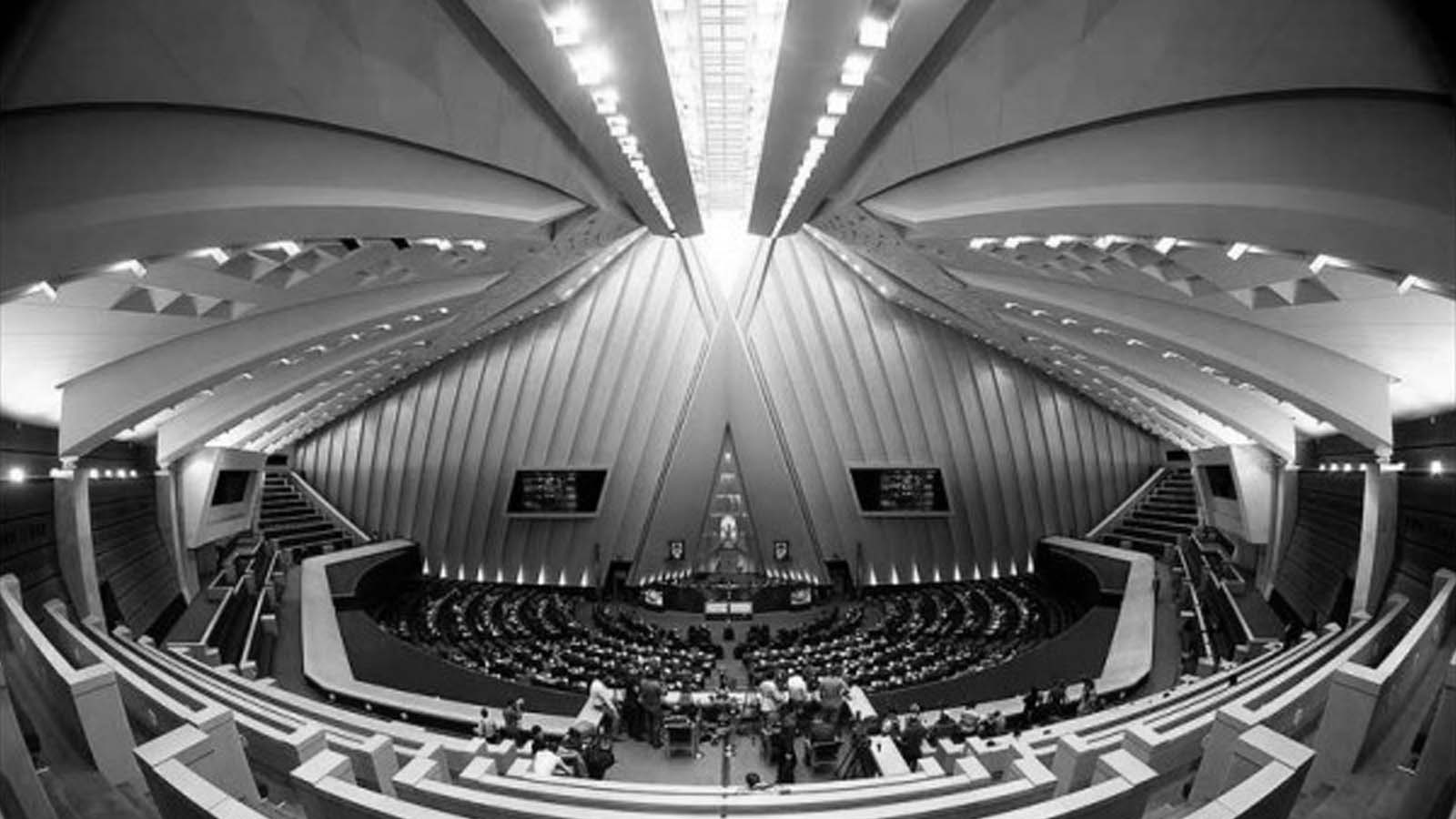
The Parliament’s recent resolution regarding the combatting of foreign influence, while raising concerns about protecting national interests, poses fundamental questions regarding cultural and artistic activities.
Unlike administrative or security mechanisms, culture relies on dialogue, interpretation, and polyphony. Art, as one of the most vital forms of culture, operates on the threshold between individual experience and collective life, between memory and the future, and between the local and the global. From this perspective, a policy that defines its relationship with art solely through the lens of passive caution inevitably targets a part of the society’s creative essence. This is because art is one of the most sensitive arenas for the production of meaning; it is an opportunity for a society to perceive itself, critique itself, and create new possibilities for being.
In the history of aesthetic thought, there is a subtle yet decisive distance between “protection” and other seemingly related terms. In this regard, prudent cultural policy strives to provide a secure environment for flourishing. This is because in a climate of fear, art-instead of offering experience-succumbs to the reproduction of caution; instead of seeking, it settles for tested repetitions; and instead of engaging with the world, it becomes trapped within the confines of short-term expediency. The result of such a trajectory is not the protection of culture, but the gradual erosion of its symbolic capital.
Based on this view, a resolution that lacks conceptual precision and clear differentiation places cultural relations under the shadow of suspicion. In art, engagement with the outside world is not a sign of influence, but a fundamental part of artistic existence. In a world where communicative boundaries are increasingly intertwined, art is shaped through dialogue with the “Other”; yet, this dialogue does not necessarily imply transformation or loss of self. A robust culture enters global relations without losing its identity, for the issue is not the closing of doors, but the strengthening of the capacity for distinction and self-awareness. Therefore, a mature cultural policy distinguishes between “connection” and “dependency,” between “exchange” and “assimilation,” and between “synergy” and “the perception of identity as ‘other’.” Without these distinctions, action is reduced to a mere level of threat, and art-which is inherently built upon ambiguity, complexity, and multi-layeredness-becomes a victim of simplified security discourse. In such a state, the artist is read not as a creator of meaning, but as a subject that is potentially problematic, and creativity is stifled before it can flourish.
While art can indeed be misused, its essence is the site of the emergence of human truths. Influence occurs when a society is deprived of the possibility of free dialogue, internal critique, and mutual trust. This is because the closing of cultural spaces fosters non-cultural dualisms: the official and the unofficial, the legitimate and the suspicious, the self and the stranger, the authentic and the tainted. These dualisms transform the field of culture into a narrow stage of exclusion and rejection, whereas culture becomes living, profound, and mature not by eliminating dissonant voices, but through dialogue with the Other.
In this context, cinema is more than just an industry of images; it is an apparatus for understanding the world, functioning across aesthetic, social, and ethical levels. If the authorities base their relationship with cinema solely on content control, they marginalize its creative narrative possibilities and its capacity for alternative perspectives. Theater, as one of the oldest forms of human encounter with the self and the Other, suffers from excessive caution in such a climate. Similarly, music-one of the most fundamental languages of emotion and solidarity-becomes trapped in a cycle of permits and considerations rather than opening horizons of experience. Consequently, a society that holds art in suspense effectively suspends its own capacity for reflection.
From a philosophical standpoint, the primary issue is not the existence of law, but the nature of the law’s relationship with cultural life. Meaningful law regulates rather than neutralizes possibilities; it clarifies essential boundaries without becoming a mechanism for ambiguity and fear. A general, vague, and highly interpretable law renders the artist’s field of action insecure. This insecurity, beyond legal aspects, casts a shadow over the artist’s symbolic and psychological well-being. Consequently, artists, working in a space where new experiences may be read as errors or threats, are deprived of audacity, and society is deprived of encountering new experiences and modern worldviews.
Accordingly, the critique of this recent parliamentary resolution is not a rejection of the principle of protecting national interests, but a call for deeper reflection on the meaning of national interests. National interests are also preserved through the production of trust, the strengthening of cultural capital, the support of creativity, and the opening of new horizons.
There is a fear that in a country of art-where “art is sufficient and enough for them”-art may be driven to the margins, and society may lose not just an aesthetic domain, but one of its primary tools for self-understanding. This fear exists because a society that loses its capacity for self-understanding will sooner or later become vulnerable to that very “influence.”
Nevertheless, the path forward lies in moving toward a cultural policy based on trust, distinction, and dialogue. A policy that recognizes an independent status for art; a policy that regards the artist as a partner in constructing human horizons. For there is no shield for national interests more steadfast than a living and self-aware culture.