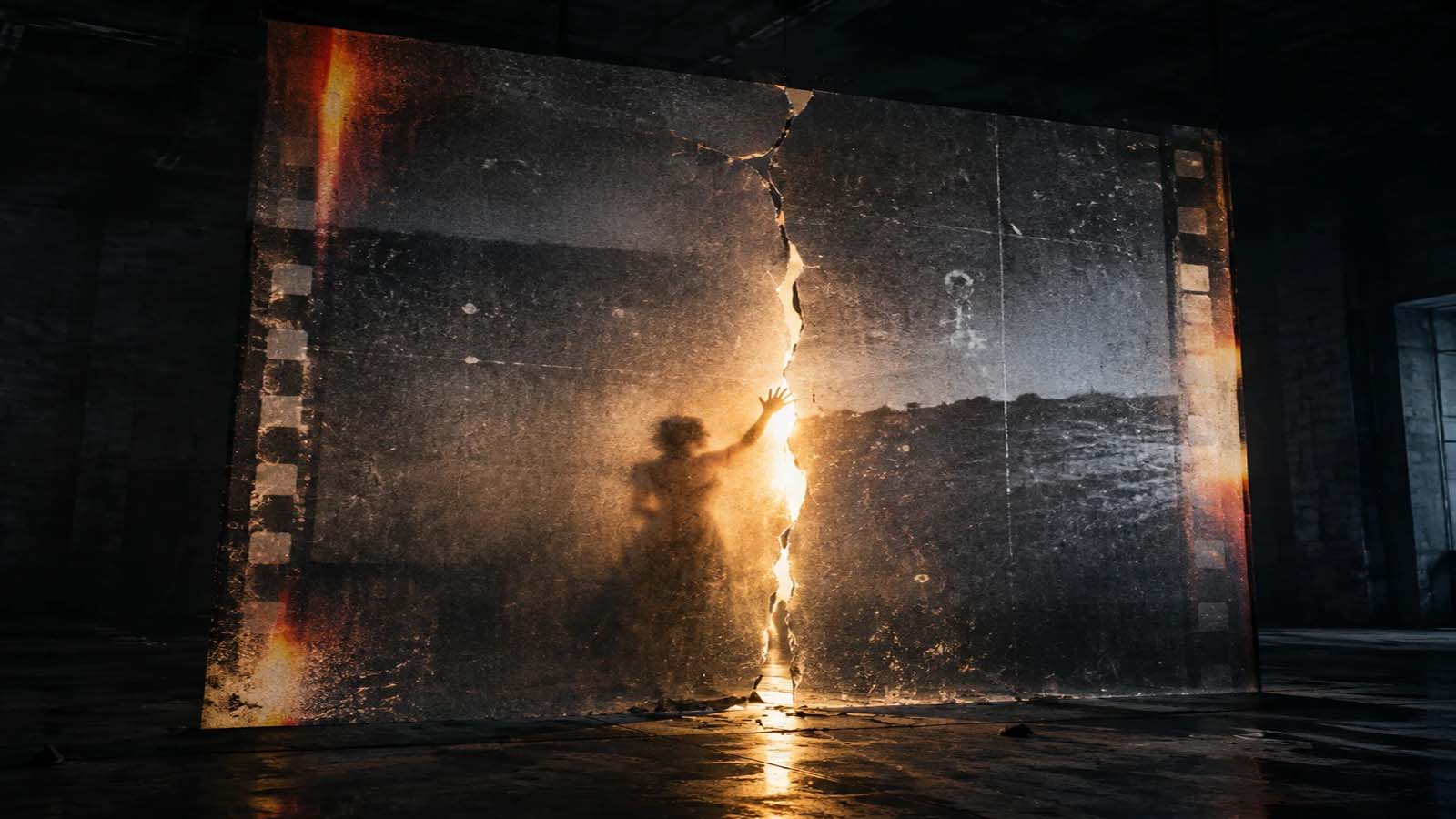
A Note by Mehdi Yarmohamadi
The philosophy of modern art has long associated the aesthetic with formal perfection, mathematical symmetry, and closed form. In this paradigm, imperfection is perceived as a deviation, a slip, or an ontological deficiency -something to be suppressed or concealed through the process of refinement and polishing. However, moving beyond the object-oriented paradigm and entering the realm of the event and the concrete lived-world , a fundamental question arises: Does art realize itself in the frozen, polished totality of the work, or does it breathe within its cracks, wounds, and ruptures?
Answering this requires a redefinition of the status of imperfection. From a phenomenological perspective, the “complete” object is distancing; it repels the spectator’s gaze, rendering the possibility of penetration into its interiority impossible. Conversely, imperfection is a rupture in the edifice of certainty -a wound opened upon the work that disrupts the dominance of form and suspends the hegemony of the computational mechanism over sensory experience. Here, imperfection constitutes an ontological opening; it is the threshold through which the spectator is invited into the heart of the creative process to engage in dialogue.
In this theoretical context, the unique significance of experimental cinema and performance art as two radical media becomes apparent.
In experimental cinema, rather than hiding behind the illusion of narrative realism, the film material bares its own corporeality, elevating imperfections into an invocation of presence. By deliberately confronting imperfection, experimental cinema deconstructs the linear narrative structure, directing the spectator’s gaze away from the consumption of narrative toward an awareness of the medium itself. In this encounter, the mechanical slip or the blurred image awakens the gaze.
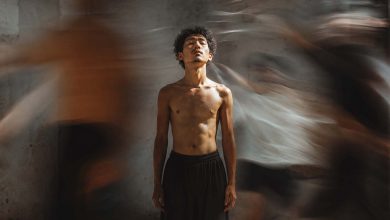
If, in experimental cinema, imperfection crystallizes in the corporeality of the physical carrier, in performance art, this fissure reaches its most fundamental layer: the human body and the “event-ness” of the now. The performer’s body is a concrete, vulnerable body that takes risks within the situation. Heartbeat, trembling voice, muscle fatigue, perspiration, a stumble in gait, and physical erosion in real-time constitute the ontology of performance art. These bodily and incomputable defects liberate the work from mechanical reproduction and mere representation.
In performance art, imperfection is the guarantor of irreproducibility; it is testimony to the truth that an event manifests only once, in the lived bond between the knowing subject and the agent. Where the body suffers and loses its balance the situation. Heartbeat, trembling voice, muscle fatigue, perspiration, a stumble in gait, and physical erosion in real-time constitute the ontology of performance art. These bodily and incomputable defects liberate the work from mechanical reproduction and mere representation.
In performance art, imperfection is the guarantor of irreproducibility; it is testimony to the truth that an event manifests only once, in the lived bond between the knowing subject and the agent. Where the body suffers and loses its balance, presence, in its most naked form, strips away the illusion of metaphor.
From the perspective of Gadamerian hermeneutics, aesthetic perception occurs when the horizon of the work intersects with the lived horizon of the spectator. A finished, perfect work leaves no room for this fusion of horizons; it is as if the discourse has already been concluded. Imperfection, however, keeps the form suspended and incomplete, thereby granting the spectator agency; through their artistic attention, creative imagination, and existential anxiety, the spectator inhabits the voids and silences of the work.
In an era defined by the dominance of automation, hyper-processed images, and mathematical standards seeking to standardize and polish every aesthetic dimension of the world, the defense of imperfection is an act of ontological resistance. For in this view, imperfection is the final refuge of the soul, corporeality, and unpredictability -a trace of human existence in a world mesmerized by the illusion of abstract perfection. Experimental cinema and performance art, by celebrating this productive vulnerability, remind us that meaning is born not in the frozen body of the object, but in the trembling excitement of the moment when form, on the verge of breaking, finds its voice.