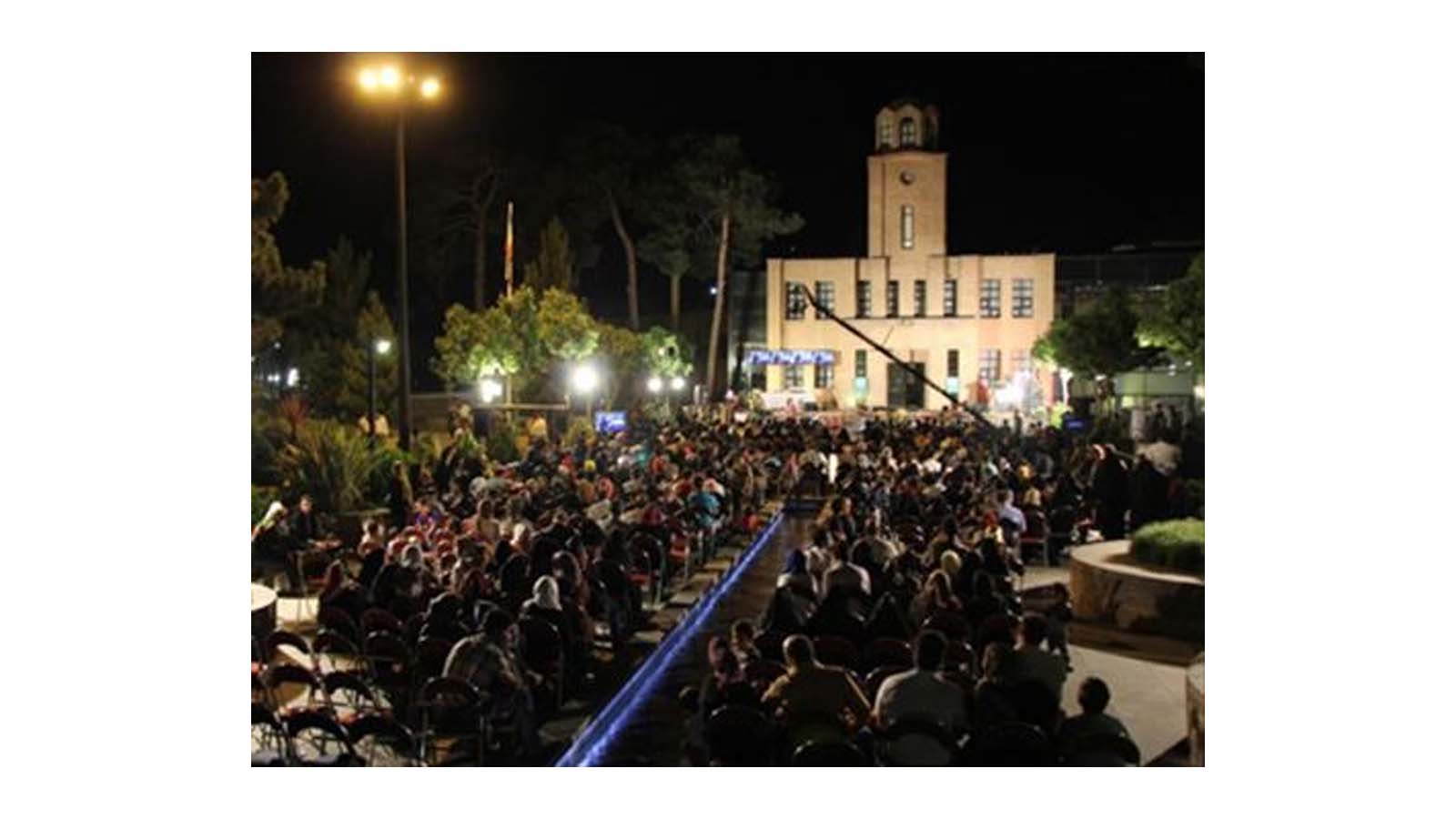
The closing ceremony of the first Parvaneh-ye Isar Short Film Festival, coinciding with the birthday of Imam Ali, was held last night at the Qasr Garden Museum with the presence of Ali Asghar Jafari, head of the Basij Center of the Islamic Republic of Iran Broadcasting Organization; General Seyed Masoud Jazayeri, deputy chief of staff of the Armed Forces; General Gholami, head of the inspection department of the Basij Resistance Organization; Mohammad Hadi Ayazi, Tehran Municipality’s deputy for social and cultural affairs; and artists.
At the beginning of the ceremony, Ali Asghar Jafari, head of the Basij Center of IRIB, congratulated the birth anniversary of Imam Ali and said: “Throughout the Islamic Revolution until today, we have offered great men and women for the realization of the values of the Islamic Revolution, and the sky of this land stands proud because of their light. We have presented more than 7,000 martyred women as a gift to this land.”
He added: “Although it was delayed, we had a responsibility to take major steps in this direction. By the order of General Naqdi, the Parvaneh-ye Isar Festival was held. In various artistic, visual, and audio fields, to the extent of our ability and resources, we have appreciated the epics of the Iranian people.”
Jafari continued: “The reality is that no matter how much we try, all our efforts are only a tiny drop compared to this endless sea. What has happened is a tribute to the wives, sisters, and women martyrs who sacrificed themselves for Islam and Muslims. Tonight, more than 15 families of martyrs are present at this gathering, and we kiss the hands of each and every one of them.”
The head of the national media Basij Center, referring to the Leader’s remarks, stated: “Today, our enemies use our ideas to achieve their own goals, and the reason is that unfortunately we have not made proper use of our own artists. We hope this shortcoming will also be corrected.”
According to the report, during the ceremony, Iranian pop singer Mehdi Modarres performed the song “Flight” on the occasion of the anniversary of the liberation of Khorramshahr, bringing joy to the guests.
Later, Eshrat Shayeg, secretary of the first Parvaneh-ye Isar Short Film Festival, congratulated the birth anniversary of Imam Ali and presented a report on the festival. She said: “The festival was held since January 2013, and more importantly, it included 149 works, films, and 23 music videos. The jury carefully watched and reviewed all these works, and naturally, at the end of this ceremony, the selected works will be honored. Perhaps through this movement, we can take a step toward the position of Muslim women.”
She added: “The filmmakers of this festival, beyond the dark screen of cinema, focused on the heroic women of our country.”
Shayeg continued by referring to the Parvaneh-ye Isar Festival and said: “Such a festival with this atmosphere has rarely happened in our country, and a night like this may never happen again. A place that was once the torture chamber of the cursed former regime has now become a meeting place for the families of martyrs and the heroic women of resistance.”
She added: “Today, our women stand at the forefront of their men in confronting global arrogance and the Western world.”
During the ceremony, filmmaker Puran Derakhshandeh, a member of the jury of the first Parvaneh-ye Isar Short Film Festival, said: “I am very happy that tonight a festival was held that made us realize that during the Sacred Defense period, we had more than 7,000 martyred women.”
Derakhshandeh added: “I hope that with the resources and abilities of our heroes, we can do something for them through proper programming and have the opportunity to create more outstanding projects in future festivals.”
Actor Iraj Nowzari, a member of the short film jury, said: “Judging is a very difficult task, especially in artistic work, because all the works that reached this festival were the result of great effort.”
Nowzari added: “Judging this festival was very difficult because, as they say, we had to find the needle in the haystack.”
He continued: “When we talk about short films, it means that you have to show your art in the shortest possible time. All the films I saw at this festival were films that introduced everything to me within one minute.”
During the ceremony, singer Alireza Shahab performed a song in honor of the martyrs of the Sacred Defense.
Later, actor Abdolreza Akbari, a member of the jury, read the statement of the jury.
The full statement of the jury is as follows:
*(The long poetic and formal jury statement continues with references to Imam Ali, the Sacred Defense period, the sacrifices of women, and the festival’s goals.)*
The statement emphasized that after 25 years since the Sacred Defense, the first edition of the Parvaneh-ye Isar Short Film Festival was being held, and highlighted the sacrifices of more than 7,000 women martyrs, injured women, mothers, and wives of martyrs.
It stated that the films in this edition, in the short narrative and documentary categories, focused on the educational role of mothers, wives of martyrs, veterans, and prisoners of war in resistance, perseverance, and the victory of the Islamic Revolution and Sacred Defense. The jury noted that these works were created by young filmmakers, some of whom had not personally experienced the Sacred Defense period.
The jury praised the organizers and expressed hope that cultural and filmmaking institutions would support future editions and help expand the festival. It also stated that holding such festivals among a wider range of artists and filmmakers would contribute to the growth of works and the spread of Sacred Defense culture.
During the ceremony, General Seyed Masoud Jazayeri, deputy chief of staff of the Armed Forces, referring to the anniversary of the liberation of Khorramshahr, said: “We are on the verge of a great victory. We must understand what Khorramshahr truly means, what others wanted, and what our great society and nation accomplished.”
Jazayeri added: “The Sacred Defense is called ‘sacred’ when defense is formed within the framework of Islamic teachings. A war was imposed on our country. The nation rose and resisted, and this defense was shaped according to Islamic teachings.”
He continued: “The eight-year Sacred Defense became a precious jewel, and pieces of that treasure are still with us today.”
Jazayeri stated: “When the enemy attacked us, it hoped Tehran would surrender. When the enemy’s war machine became trapped in heroic Khorramshahr, it abandoned the crisis it had created for itself. This was where Sacred Defense proved its strength.”
He added: “If yesterday the enemy’s attack was on Bostan and Susangerd, today the attack is on the borders of beliefs, thoughts, behavior, and will. It is an attack on the spirit and soul of honorable Iranian Muslims.”
He continued: “The eight-year defense continues today until the enemy feels Sacred Defense standing before it. Although the Cold War has ended, we are now engaged in a war of ideas.”
During the ceremony, 15 families of Sacred Defense martyrs who were present were honored.
Pop singer Gholamreza Sanatgar also performed several musical pieces.
At the end of the ceremony, the top filmmakers of the first Parvaneh-ye Isar Short Film Festival were honored. The winners were:
Winners of the First Parvaneh-ye Isar Festival
A) Documentary Section
* Best Research: Mehdi Yarmohammadi — *The Wild Hair of the Earth*
* Best Cinematography: Davood Rahmani — *Maybe Far, Maybe Near*
* Best Sound Recording: Iraj Norouzi — *Emilia*
* Best Narrator: Roya Teymourian — *One Woman’s Day*
* Best Editing: Jamshid Mojaddadi — *In the Desert* / with appreciation for *The Wild Hair of the Earth*
* Best Screenplay: Ruhollah Akbari and Salah Azough — *Emilia*
* Best Director: Mehdi Yarmohammadi — *The Wild Hair of the Earth*
* Best Producer: Hamid Naziri Astaneh — *The Twelfth House*
* Best Idea: Behrouz Khandandel — *Searching for the Smell of Village Bread*
* Best Documentary Film: Mehdi Yarmohammadi — *The Wild Hair of the Earth*
Special recognition was given to “Until Forever”, directed by Mortaza Matouri, for its important approach to an influential subject and its effective reconstruction.
B) Narrative Section
* Best Screenplay: Mohammadreza Zarezadeh — *Molla Zahra*
* Best Cinematography: Roozbeh Rayga — *Hananeh*
* Best Sound Recording: Ali Zolfaghari — *Waiting*
* Best Editing: Arash Rassafi — *Silence of the Ponds*
* Best Producer: Ruhollah Sohrabi — *Hananeh*
* Best Director: Hassan Kamalian — *Narges Night* / with appreciation for *Hananeh*
* Best Short Film: Dariush Ghozabani — *Hananeh*